Product bundling: what it is and how it will help you sell more products on your e-commerce site

Every order that leaves with one more item spreads the cost of shipping and of winning that customer more thinly. That is exactly what product bundling sets out to do.
Product bundling means selling several items together in a pack at a single price, usually lower than the sum of their individual prices. An online shop uses it to raise the average order value, clear slow-moving products and introduce new ones. It only pays off if the bundle price respects your minimum margin.
Key takeaways
- Product bundling groups related products into a pack with a single price, almost always at a discount on buying them separately.
- There are two main types: pure bundling, where the items are only sold as a pack, and mixed bundling, where they can also be bought individually.
- A bundle usually has a lower percentage margin than a single product, but it can leave more margin in euros per order if the customer was only going to buy one item.
- The bundle price is worked out from the cost of each component, the per-order costs and the price at which your competitors sell those same products individually.
What is product bundling?
Product bundling is a sales strategy based on offering packs of products that are related in some way. Its direct aim is to increase what the customer spends on each purchase, although its benefits for an ecommerce business go beyond the order value.
Bundling is often combined with cross-selling (selling complementary products) and upselling (offering a higher-end, more expensive version of the same product). The difference is the format: a bundle turns that recommendation into a single item with a single price.
Bundles are no longer limited to food or cosmetics, the sectors traditionally associated with this kind of offer. Today, books, courses, school supplies, electronics accessories and pet products are all sold together. A bundle can combine different items or several units of the same product (known as multipacks).
A well-designed bundle can take four different approaches:
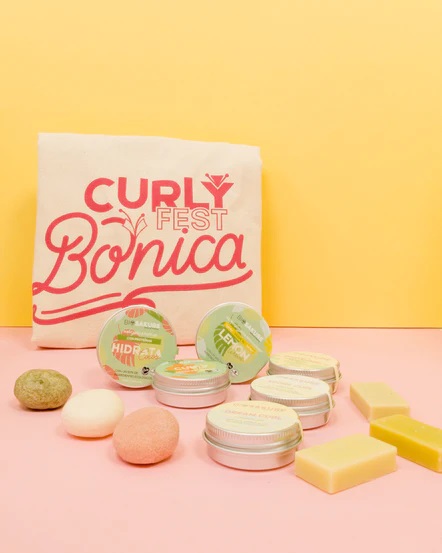
Trying several products from one brand
A brand that groups several of its own products gets the customer to discover items they had not planned to buy. If one of them wins the customer over, the next purchase of that product on its own no longer needs a discount.
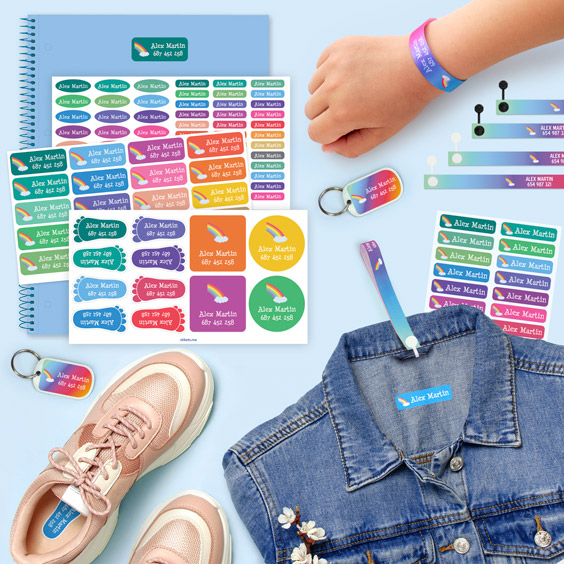
Making the customer’s job easier
A compilation bundle brings together everything the customer will need for a specific task. Buying each item separately would take them longer and cost them more.
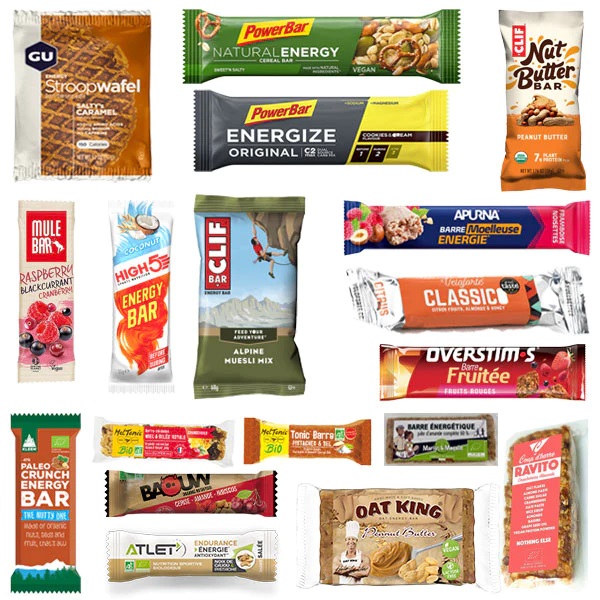
Helping undecided customers
A customer who cannot decide which brand to choose will appreciate a selection of several brands so they can try them all. The multi-brand bundle settles the question and the sale stays in your shop.
Shifting dead stock
A slow-moving product sells better alongside others with stronger demand. The same approach works for clearing items you want out of the warehouse quickly, because the season is ending or a model is being replaced.
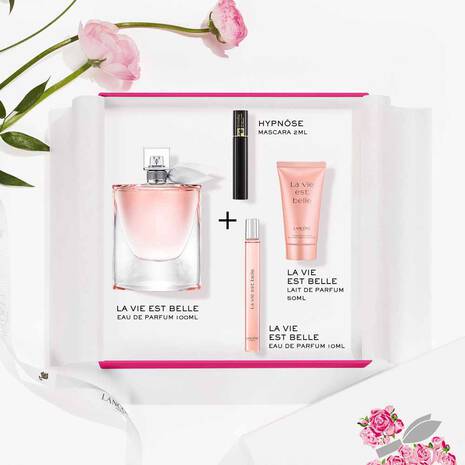
In all four cases the hook for the customer is the same: the bundle costs less than buying each item separately. That discount comes out of your margin, which is why you have to calculate it before you publish the bundle.
What are the benefits of product bundling for ecommerce?
Product bundling gives an online shop seven specific advantages, from more units per order to a less direct price comparison with competitors.
It increases your sales
More units per order is the main advantage. The customer who was looking for one product sees the bundle, works out the saving and takes several items. The percentage margin goes down, but the margin in euros per order can go up, as the worked example further down shows. If you want to track that over time, average order value is one of the ecommerce metrics worth calculating every month.
It shifts slow-moving stock
Slow sellers, overstocked items and products that are no longer on trend find a buyer when they are paired with products that sell themselves. The bundle means you don’t have to cut the price of the item on its own, which stays at its usual price.
It promotes new products or brands
Customers are wary of items that have no reviews yet or whose usefulness they don’t know. A bundle that combines the new product with high-demand products gives it a trial without the customer feeling they are risking their money.
It brings seasonal purchases into a single order
Some products are bought together, especially at key dates such as back to school. A bundle with everything needed saves the customer time and makes sure the whole purchase happens in your shop rather than being split across several.
It makes the most of shipping costs
Picking, packing and shipping an order costs roughly the same with one item as with three. If you offer free shipping above a certain amount, a well-designed bundle helps customers pass that threshold and spreads the shipping cost over more products.
It creates unique bundles that set you apart from competitors
A combination of products that only your shop sells, useful and well priced, competes on value and not just on price. A customer looking for it has no identical alternative on another website.
It makes your prices harder to compare
An exclusive bundle (especially in pure bundling) has no equivalent price at your competitors, so a direct comparison is harder. Don’t rely on it too much: an attentive customer can add up the price of each component in other shops, and comparing badly matched bundles is one of the price comparison mistakes that eat into your margin.
What are the types of product bundling?
There are two types of product bundling: pure and mixed. The difference is whether or not the customer can buy the items in the bundle separately.
- Pure bundling: the items are only sold inside the bundle. The customer cannot buy them individually.
- Mixed bundling: the items in the bundle are also sold individually. If the customer chooses the set, they pay less than the sum of the separate prices.
| Aspect | Pure bundling | Mixed bundling |
|---|---|---|
| Are the items sold individually? | No | Yes |
| Price comparison | Difficult: the bundle has no equivalent | Easy: the customer sees the saving against the individual prices |
| Risk for the customer | Pays for items they may not want | Chooses between the bundle and buying individually |
| Typical use | Closed kits, gift sets, exclusive products | Online shops with a wide catalogue and discounted bundles |
| Margin control | A single price to watch | You need to watch the bundle price and the price of each component |
Mixed bundling is the most flexible format for an online shop, because the bundle sits alongside individual sales and the customer sees the saving straight away. Pure bundling works better when the set makes sense as a product in its own right, such as a gift set.
How do you price a bundle without losing margin?
You price a bundle by adding up the cost of each component and the per-order costs, then setting a price that leaves at least your minimum margin. Next, you compare it with what those same products would cost individually at your competitors, so the discount is genuine.
Here is a hypothetical example with prices excluding VAT. A shop sells three products: A (price €30, cost €15), B (price €20, cost €8) and C, a slow seller (price €10, cost €4). Each order has a picking and packing cost of €2 and the card payment provider charges 1.5% of the amount (for simplicity it is applied to the price excluding VAT; in practice it is charged on the total including VAT and the difference is a few cents). In the example the customer pays for shipping; if you cover it, add it to the per-order costs. The shop creates a mixed bundle A + B + C for €50, compared with €60 for the three separately.
| Per order | Product A only | Bundle A + B + C |
|---|---|---|
| Selling price (excl. VAT) | €30.00 | €50.00 |
| Cost of products | €15.00 | €27.00 |
| Card payment fee (1.5%) | €0.45 | €0.75 |
| Picking and packing | €2.00 | €2.00 |
| Margin in euros | €12.55 | €20.25 |
| Margin on price | 41.8% | 40.5% |
The bundle leaves €7.70 more margin per order than selling product A alone, even though the percentage drops slightly. It also clears one unit of product C, which would otherwise sit in the warehouse. The comparison holds if the customer was only going to buy A: if they were already going to buy all three items for €60, the shop gives up €9.85 of margin with the bundle (€30.10 against €20.25).
The minimum bundle price comes from solving for the margin you require. If the shop wants to earn at least 30% on the price, the calculation is: price = (27 + 2) / (1 − 0.015 − 0.30) = 29 / 0.685 = €42.34. Below that amount, every bundle sold moves the shop further from its target. If you want to review the general method, the guide to pricing a product with a formula and example explains it step by step.
The last step is to look outside. If competitors sell A at €27, B at €18 and C at €9, those three products add up to €54 in another shop. The bundle at €50 is still 7.4% cheaper than that total, so the saving you advertise is credible. If competitors cut their prices, the room between €42.34 and €50 tells you how far you can adjust.
How to use product bundling as a sales strategy
The success of product bundling depends on choosing the right products and setting the price with data. The choice cannot be made at random, and the price requires you to know your costs, your margin and your competitors’ prices. A competitor price monitoring tool covers the external data.
Always keep the focus on your customer
Your order data tells you what your customers buy together, so start there. Think about what they need and what they want, and create different bundles for each type of customer instead of one generic bundle for everyone.
Keep an eye on your competitors’ prices
Monitor the prices of the products you have in common with your competitors. That way you will know what price is competitive for each component on its own and whether the bundle price is still attractive when they change theirs.
Identify your costs and set your minimum profit margin
Selling a bundle below its real cost turns more sales into bigger losses. The real cost includes the purchase price of each product as well as the marketplace commission, the card payment fee, picking and packing, and any shipping you cover.
With the cost of each product and the minimum margin you need, you will know whether the bundle is profitable. You may even be able to include a “free” item if the margin on the rest allows it. The detailed calculation is in the article on calculating profit margin in ecommerce.
Communicate the saving honestly
A bundle designed to mislead the customer is found out sooner or later, and that customer does not come back. The bundle has to be profitable for you and useful for them, with products of the quality they expect.
Honesty is also a legal matter. If you advertise the bundle as a price reduction against a previous price, Directive (EU) 2019/2161 requires the previous price shown to be the lowest price you applied in the 30 days before the reduction. In Spain, this is set out in Article 20 of the Retail Trade Act, Law 7/1996 (in Spanish). You can read the text of the directive on EUR-Lex. Showing the real sum of your shop’s individual prices is the safest way to communicate the saving.
Combine surplus products with high-demand ones
Product bundling is a good way to clear surplus stock. Identify the products that are not moving or the ones you want to clear because of changes in trends or models.
Those items are good candidates for a bundle alongside products with stronger demand, as long as they meet the requirements above: useful for the customer, good quality and enough margin.
Make the bundle visible
A bundle nobody sees does not sell. Give it a prominent place in your shop and suggest it on the product pages of the items it contains or of related items, which is where the customer is already making a decision.
Frequently asked questions about product bundling
How is product bundling different from cross-selling?
Cross-selling recommends complementary products that the customer adds to the basket one by one, each at its own price. Product bundling groups those products into a single item with a combined price, usually at a discount.
How much discount should a bundle have?
There is no universal percentage. The maximum discount is the one that keeps your minimum margin after deducting the cost of the products and the per-order costs; in the example above, the bundle could drop from €60 to €42.34 without breaking a 30% margin.
Can you sell bundles on Amazon?
Yes. A seller can create a bundle as its own product, and Amazon.es also offers virtual product bundles to brands enrolled in its Brand Registry, which group several products on a single listing. Before publishing a bundle, check the Seller Central help for the requirements Amazon sets for bundles and multipacks in your category, including product codes.
So, are you going to use product bundling in your online shop?
Product bundling helps you sell more per order and give the customer a real saving. A well-chosen bundle, at an attractive price and delivering what it promises, builds trust and makes the customer more open to your next bundles.
For the shop, product bundling is also a way to move dead stock and introduce new products without cutting the price of the individual items. The condition is the same in every case: know the cost of each component, set a minimum margin and keep an eye on what your competitors charge for those same products.
How do you know whether your bundle price is still competitive?
To know, you need three things: the price of each component at your competitors, data updated several times a day and your real margin. Boardfy is a SaaS platform for competitor price monitoring and dynamic pricing for e-commerce, with direct price updates on Amazon, eBay, Google Shopping and Mirakl marketplaces.
- Boardfy reads the price of each bundle component at your competitors every 6 hours, matched by EAN or reference.
- Boardfy calculates your margin from the product cost, deducting the marketplace commission, card payment fees and costs such as picking.
- Boardfy never goes below your minimum price or margin when it applies dynamic pricing.
Boardfy does not decide your strategy: it applies the rules you set. You can try it free for 7 days, no card required.